
Spring Ant Invasion: Why GTA Homes Get Hit Every April
You saw one ant on the kitchen counter last week. Then three more near the back door yesterday. This morning there’s a line of them trailing up the baseboard near your deck.
Welcome to April in the GTA. This is ant season.
If you’re in Toronto, Brampton, Mississauga, or Vaughan, you’ve probably noticed it. The temperature hits double digits for a few days straight, and suddenly ants are everywhere. It’s not a coincidence. It’s biology, and it happens every single spring.
Here’s what you’re dealing with, how to tell if it’s serious, and when a DIY solution won’t cut it.
Why Spring Triggers Ant Activity in Toronto
Ants don’t die in winter. They go dormant.
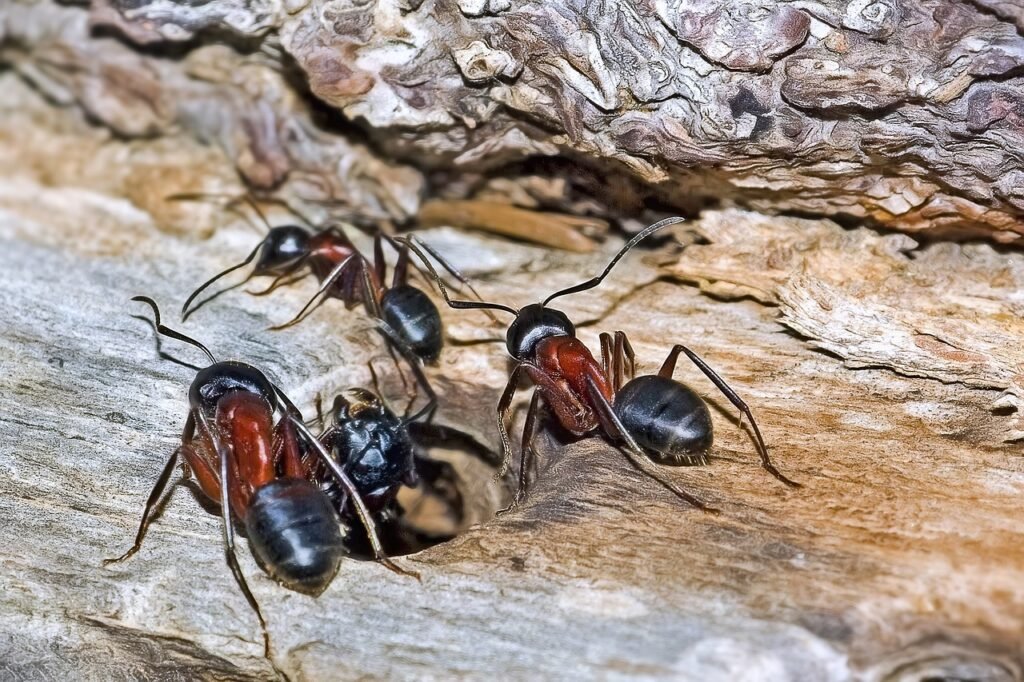
Most of the ants you see in April—especially the big black ones—are carpenter ants. They overwinter in colonies inside tree stumps, wood piles, under mulch, or inside the wall voids of your home if they’ve already established a nest.
When soil temperatures reach about 10°C and stay there for a few consecutive days, carpenter ants wake up. In the GTA, that threshold usually hits in early to mid-April. Some years it’s late March if we get an early warm spell. Other years it’s not until the third week of April.
Once they’re active, the colony sends out scouts. Those scouts are looking for two things: food and new nesting sites. If your home has accessible wood (deck posts, window frames, roof soffits) and a food source (crumbs, pet food, honeydew from aphids on your trees), you’re on the list.
The ants you see on your counters in April aren’t the invasion. They’re the reconnaissance team. The real colony is outside—or worse, already inside your walls.
Carpenter Ants vs Other Ant Species in Ontario
Not every ant you see is a problem. Ontario has about a dozen common ant species, but only a few are home invaders.
Carpenter Ants (the big ones)
- Size: 6-12mm long—about the size of a grain of rice
- Color: Black or dark reddish-brown
- Shape: Smooth, rounded thorax (the middle body segment)
- Behavior: Slow-moving, often seen near wood or moisture sources
- Damage potential: High—they excavate wood to build nests, which weakens structural beams, window frames, and deck posts over time
If you’re seeing large black ants indoors between April and June, especially near windows, doors, or wood trim, that’s almost certainly carpenter ants. They don’t eat the wood—they chew through it to create galleries for their colony. The debris they leave behind looks like sawdust mixed with dead insect parts.
Carpenter ants cause an estimated $5 billion in structural damage annually across North America. In the GTA, where many homes have wooden deck structures and older window frames, they’re a serious issue.
Pavement Ants (the tiny ones)
- Size: 2-3mm—barely visible
- Color: Light brown or tan
- Behavior: Fast-moving, often in large groups, nest under driveways and sidewalks
- Damage potential: Low—annoying but harmless
These are the ants you see swarming around a dropped crumb on your patio. They nest in cracks in concrete and pavement, not wood. They’re a nuisance but not a structural threat.
Pharaoh Ants (the indoor year-round ones)
- Size: 1.5-2mm—extremely small
- Color: Pale yellow or amber
- Behavior: Nest indoors in warm areas like wall voids near heating pipes, behind baseboards, inside appliances
- Damage potential: Low structurally, but they contaminate food and are notoriously hard to eliminate
Pharaoh ants are not seasonal. If you’re seeing tiny yellow ants in January, that’s pharaoh ants. If you’re seeing them in April outdoors, it’s not pharaoh ants—it’s probably pavement ants.
Fire Ants (rare in Ontario)
Fire ants can’t survive Ontario winters. You’ll occasionally see them in imported soil or potted plants from the southern U.S., but they don’t establish outdoor colonies here. If someone tells you they have fire ants in Scarborough, they’re misidentifying carpenter ants or European fire ants (a different, less aggressive species that nests in lawns but doesn’t sting like the southern variety).
Signs You Have a Carpenter Ant Problem
Seeing a few ants in spring doesn’t mean you have an infestation. But if you’re seeing any of these signs, you’ve got a problem that needs professional attention:
1. Large Black Ants Indoors After Sunset
Carpenter ants are nocturnal. If you flip on the kitchen light at 11pm and see large black ants on the counter, that’s a red flag. Daytime sightings are scouts. Nighttime sightings mean there’s a food trail or a nest nearby.
2. Sawdust Piles (Frass) Near Wood
Carpenter ants don’t eat wood—they excavate it. The debris they push out of their galleries is called frass. It looks like fine sawdust mixed with bits of insulation, dead insect parts, and ant body fragments.
Check around:
- Window sills
- Door frames
- Baseboards
- Deck posts
- Roof soffits
- Garage beams
If you find small piles of sawdust in these areas, you’ve got an active nest.
3. Rustling Sounds in Walls
This one sounds like a horror movie, but it’s real. Large carpenter ant colonies make audible rustling or crinkling sounds inside wall voids, especially at night when the house is quiet. If you put your ear to the wall near a window frame and hear faint movement, that’s not your imagination.
4. Winged Ants Indoors in Late Spring
In May and June, mature carpenter ant colonies produce winged reproductives called swarmers. These are the ants that leave the colony to start new nests. If you see winged ants indoors, especially near windows, you don’t just have a small problem—you have an established colony that’s reproducing.
Swarmers are often mistaken for termites. The difference: carpenter ant swarmers have elbowed antennae and a pinched waist. Termite swarmers have straight antennae and a thick, uniform body.
5. Ant Trails Leading to Wood Structures
Follow the ants. If you see a line of large black ants trailing from your yard to your deck, up a fence post, or along the foundation near a wooden porch, that’s a highway to their nest. Carpenter ants often nest in damp or rotting wood first, then expand into sound wood as the colony grows.
In Brampton and Vaughan, where many homes have wooden deck structures and vinyl-sided exteriors with wood sheathing underneath, carpenter ants are especially common. They enter through gaps where the deck attaches to the house, around window frames, or through roof soffits damaged by winter ice.
Why GTA Homes Are Especially Vulnerable
Toronto and surrounding cities have a perfect storm of conditions that attract carpenter ants:
Mature Trees and Wooded Lots
Neighborhoods like High Park in Toronto, the Credit River area in Mississauga, and older subdivisions in Oakville have large, mature trees. Dead tree stumps and fallen logs are prime carpenter ant nesting sites. When those colonies grow, they send out satellite colonies to nearby structures—like your house.
Wooden Decks and Porches
Decks are everywhere in the GTA. And most of them have at least some wood that’s damp, weathered, or starting to rot—especially where posts meet the ground or where the ledger board attaches to the house. That’s exactly where carpenter ants start.
Ice Dam Damage
Ontario winters are hard on homes. Ice dams cause water to back up under roof shingles, which rots the wood sheathing and soffits. By spring, that rotted wood is a nesting jackpot for carpenter ants.
Proximity to Ravines and Green Spaces
If your home backs onto a ravine, parkland, or conservation area, you’re closer to the natural habitats where carpenter ants thrive. Neighborhoods near the Don Valley, Humber River, and Credit River ravines see higher carpenter ant activity than areas with less tree cover.
What Not to Do When You Find Ants
The instinct is to grab a can of Raid and spray every ant you see. That’s a mistake.
Here’s why:
1. Store-Bought Sprays Just Scatter the Colony
Most consumer ant sprays are repellents. They kill the ants you spray directly, but they also drive the rest of the colony away from the treated area. If you spray the kitchen baseboards, the ants just move to the bathroom. Or deeper into the walls.
You’ve made the problem harder to find, not smaller.
2. Baits Work—If You Use the Right Ones
Ant baits can work for carpenter ants, but only if the bait contains a slow-acting toxin that the workers carry back to the colony. The active ingredient needs to be something like fipronil, borax, or indoxacarb.
The problem is that carpenter ants have variable food preferences depending on the season. In spring, they’re hunting for protein (dead insects). In summer, they switch to sugars (honeydew from aphids). If you put out a sugar-based bait in April, they’ll ignore it.
Professional exterminators use protein-based baits in spring and sugar-based baits later in the season. Most DIY baits are one-size-fits-all and miss the mark.
3. You Can’t Find the Nest on Your Own
Carpenter ant colonies can be massive—up to 50,000 ants in a mature colony. The nest you see might be a satellite colony. The main nest could be in a tree stump 30 feet from your house, or inside a wall void you can’t access without cutting into drywall.
If you treat the satellite nest but miss the main colony, the problem comes back in weeks.
When to Call an Exterminator
If you’re seeing large black ants indoors regularly, finding sawdust piles, or spotting winged ants in late spring, don’t wait. Carpenter ants don’t go away on their own, and the damage they cause compounds over time.
A professional ant exterminator in Toronto or the surrounding GTA will:
- Inspect the exterior and interior to locate nests, entry points, and trailing patterns
- Identify the species (not all big black ants are carpenter ants—some are harmless field ants)
- Treat the colony at the source, not just the ants you see indoors
- Eliminate satellite nests in wall voids, soffits, or deck structures
- Seal entry points and recommend structural repairs to prevent re-infestation
Treatment usually involves a combination of baiting (to eliminate the colony) and perimeter treatment (to stop new ants from entering). In severe cases where the nest is inside a wall void, treatment may require drilling small access holes to inject dust or foam insecticide directly into the gallery.
The cost of professional carpenter ant treatment in the GTA typically ranges from $300 to $800 depending on the size of the property and the extent of the infestation. That’s a lot cheaper than replacing a rotted deck or repairing structural beams.
Preventing Carpenter Ants Before They Nest
If you’re reading this in early April and you haven’t seen ants yet, you’ve got a head start. Here’s how to keep it that way:
1. Remove Wood-to-Ground Contact
Deck posts, fence posts, and firewood stacks should not sit directly on soil. Use concrete footings for structural posts and stack firewood on a rack at least 6 inches off the ground.
2. Fix Moisture Problems
Carpenter ants are attracted to damp or rotting wood. Fix leaking gutters, repair ice dam damage, and replace any wood that’s soft or spongy. Check your roof soffits, window sills, and the area where your deck ledger board attaches to the house.
3. Trim Trees and Shrubs Away from the House
Tree branches that touch your roof or siding are highways for carpenter ants. Trim back any vegetation that’s within 3 feet of your home.
4. Seal Gaps and Cracks
Ants can squeeze through a gap the width of a credit card. Seal cracks around windows, doors, utility penetrations, and foundation vents with caulk or weatherstripping.
5. Clean Up Outdoor Debris
Dead tree stumps, fallen logs, and piles of mulch or leaves are carpenter ant magnets. If you’ve got a woodpile for your fireplace, keep it at least 20 feet from your house and inspect it regularly.
Carpenter Ants in Specific GTA Neighborhoods
Toronto (High Park, Danforth, Leslieville)
Older homes with mature trees and original wood-framed windows. Ice dam damage is common on 1950s-era bungalows. Carpenter ants often nest in rotted soffits and window frames.
Brampton (Bramalea, Sandalwood, Queen West)
Newer subdivisions with extensive wooden deck structures. Ants nest where deck posts meet the ground or where the ledger board is improperly flashed. Vinyl siding hides the damage until it’s severe.
Mississauga (Port Credit, Lakeview, Erin Mills)
Proximity to Credit River and Lake Ontario means higher humidity and more moisture damage. Carpenter ants thrive in damp wood near basement window wells and crawl space vents.
Vaughan (Maple, Woodbridge, Thornhill)
Large lots with wooded areas and ravine-backed properties. Carpenter ants nest in tree stumps and satellite into homes through roof soffits and attic vents.
Scarborough (Guildwood, West Hill, Agincourt)
Mix of older homes and new builds near ravines and parkland. Carpenter ants are especially common in properties backing onto the Rouge Valley or Highland Creek.
Final Thoughts
Spring ant invasions in the GTA aren’t random. They’re predictable, seasonal, and preventable if you know what you’re dealing with.
If you’re seeing a few pavement ants on your patio, relax. They’re harmless.
But if you’re seeing large black ants indoors, finding sawdust near wood trim, or noticing winged ants in May, don’t ignore it. Carpenter ants cause real structural damage, and the problem only gets worse as the colony grows.
We’ve been handling carpenter ant infestations across Toronto, Brampton, Mississauga, and Vaughan for years. We know where they nest, how they move, and how to eliminate them at the source—not just the ants you see on your counters.
If you’re seeing signs of carpenter ants this spring, don’t wait until they’re in the walls. Get a free quote and we’ll have someone at your door the same day.