You turned on the bathroom light at 2am and saw it — a small, silver-grey bug darting across the tile, moving in that weird wiggling pattern. By the time you grabbed something to smash it, it was gone. That was a silverfish.
And if you saw one, you’ve got more. They don’t travel alone.
Silverfish are one of those pests most people don’t notice until there’s already a problem. They’re nocturnal, they’re fast, and they hide in places you don’t check often — behind baseboards, under sinks, in the back of closets. You’ll spot one in the bathtub or near a bookshelf, but by then they’ve been living in your walls for weeks.
Here’s what silverfish are, why they’re in your Toronto home, and what actually works to get rid of them.
What Are Silverfish?
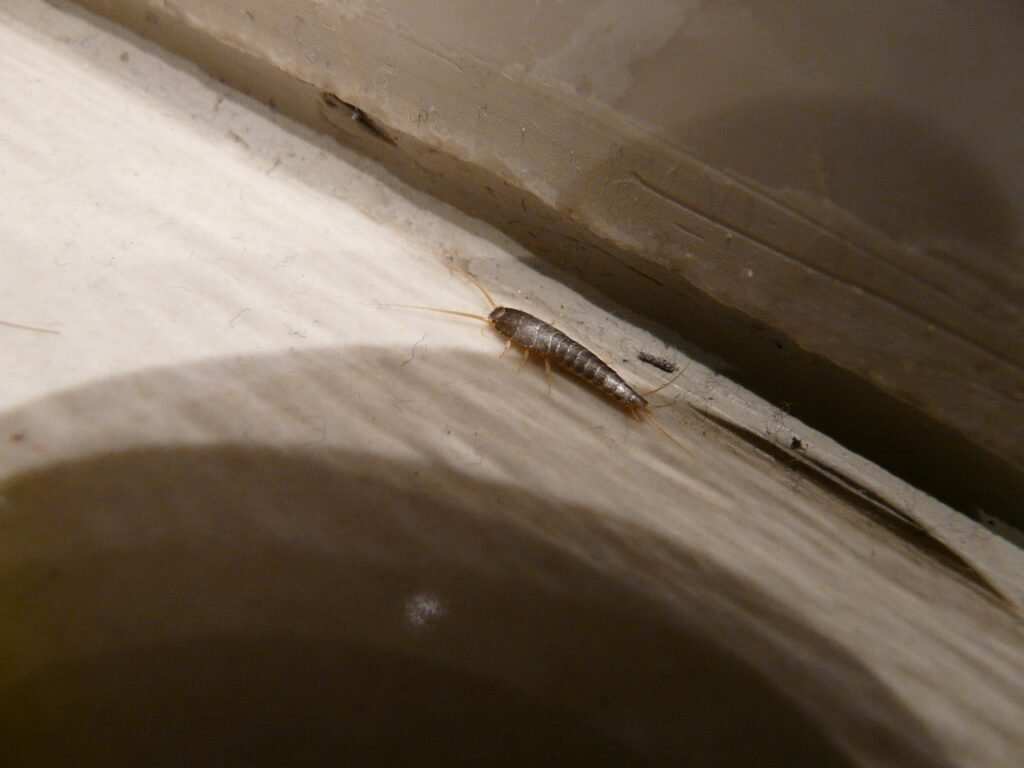
Silverfish (Lepisma saccharina) are small, wingless insects that have been around for over 400 million years. They’re older than dinosaurs. They’re shaped like a teardrop, covered in metallic silver scales, and move in a fish-like wiggle — that’s where the name comes from.
They’re about 12-19mm long (half an inch), with two long antennae at the front and three tail-like appendages at the back. If you see one up close, they look prehistoric. Because they are.
Where You’ll Find Them in Your House
Silverfish need two things: moisture and food. And your home has both.
They’re most common in:
- Bathrooms — humidity from showers, dark corners under sinks
- Basements — cool, damp, undisturbed spaces
- Laundry rooms — moisture from dryers and washing machines
- Kitchens — especially under sinks and behind appliances
- Attics — if there’s moisture from roof leaks or poor ventilation
- Closets — dark, quiet, with fabric and paper to feed on
In the GTA, older homes built before the 1980s are especially prone to silverfish. Basements in Toronto, Mississauga, and Brampton often have humidity issues from foundation seepage or poor ventilation. That’s perfect silverfish habitat.
What Do Silverfish Eat?
This is the creepy part. Silverfish eat stuff you don’t think of as food.
They feed on carbohydrates, sugars, and starches. Their diet includes:
- Paper — books, wallpaper, cardboard boxes
- Glue — book bindings, envelopes, stamps
- Fabric — cotton, linen, silk (they’ll eat holes in clothes)
- Flour, oats, sugar — anything in your pantry that’s not sealed
- Dead insects — they’re scavengers
- Dandruff and hair — yes, really
If you’ve ever found small irregular holes in old books, yellowed patches on wallpaper, or tiny notches in clothing stored in the basement, that’s silverfish damage. They can live for 2-8 years and survive up to a year without food. They’re patient pests.
Signs You Have a Silverfish Infestation
You might not see silverfish often — they’re nocturnal and fast. But you’ll see the evidence.
1. Sightings in Bathrooms or Basements
If you’ve seen even one, assume there are more. Silverfish don’t infest alone. They reproduce year-round indoors, laying 1-3 eggs per day in hidden cracks. A small population becomes a big one fast.
2. Damage to Paper and Fabric
Look for:
- Irregular holes or notches in books, magazines, or cardboard
- Yellow stains on paper or wallpaper (their feces)
- Small holes in stored clothing, especially cotton or linen
3. Shed Skins
Silverfish molt throughout their lives. You’ll find tiny translucent exoskeletons in areas they frequent — baseboards, closet corners, under sinks.
4. Small Black Pepper-Like Droppings
Silverfish feces look like ground black pepper. You’ll find them near their feeding areas — bookshelves, pantry corners, bathroom baseboards.
Why Are Silverfish in Your GTA Home?
Silverfish thrive in humid environments. If your home has moisture problems, you’ve created silverfish paradise.
Common Causes in Toronto and the GTA:
- Basement humidity — older Toronto homes with unfinished basements or foundation issues
- Bathroom condensation — poor ventilation after showers
- Leaky pipes — under sinks, behind toilets, in laundry rooms
- Roof leaks — attic moisture from damaged shingles or ice dams (especially after harsh Ontario winters)
- Poor ventilation — humid air trapped in closets, crawl spaces, or storage areas
Silverfish need humidity above 75% to thrive. In the GTA, basements and bathrooms hit that mark easily without dehumidifiers or proper airflow.
They also get into homes through:
- Cracks in foundations — common in older Toronto and Brampton homes
- Gaps around windows and doors — especially basement windows
- Infested items brought inside — cardboard boxes, books, or furniture from storage
How to Get Rid of Silverfish
You can reduce silverfish on your own, but getting rid of an infestation completely takes professional treatment. Here’s what works.
DIY Steps (Reduces Population)
1. Lower humidity
Run a dehumidifier in basements, bathrooms, and laundry rooms. Keep humidity below 50%. Fix leaks immediately.
2. Seal cracks and gaps
Caulk around baseboards, windows, and pipes. Silverfish hide in tiny crevices — sealing entry points limits their hiding spots.
3. Remove food sources
- Store books, magazines, and paperwork in sealed plastic bins
- Keep flour, sugar, and grains in airtight containers
- Vacuum regularly to remove crumbs, hair, and dead insects
- Don’t leave damp towels or clothing on floors
4. Use sticky traps
Place traps along baseboards, under sinks, and in closets. They won’t eliminate an infestation but they’ll show you where silverfish are active.
5. Declutter storage areas
Silverfish love dark, undisturbed spaces. Clear out old boxes, unused clothing, and stacks of paper in basements and closets.
Why Professional Treatment Works Better
Silverfish are hard to eliminate completely because they hide in places you can’t reach — inside walls, under floorboards, in ceiling voids. DIY methods reduce the population but don’t target breeding sites.
Professional pest control for silverfish includes:
- Residual insecticide application in cracks, crevices, and baseboards where silverfish hide and breed
- Dust treatment in wall voids and attics (long-lasting, kills silverfish on contact)
- Moisture assessment to identify and fix conditions attracting them
- Follow-up treatments to break the breeding cycle
We treat silverfish infestations in Toronto, Brampton, Mississauga, and across the GTA. If you’re seeing silverfish regularly — especially in multiple rooms — it’s worth getting an inspection before they damage more of your belongings.
How Long Does It Take to Get Rid of Silverfish?
With professional treatment, you’ll see a major reduction within 2-3 weeks. Complete elimination can take 4-6 weeks depending on the severity of the infestation.
Silverfish eggs hatch in 19-60 days depending on temperature. That’s why follow-up treatments are critical — the first treatment kills active adults, the second targets newly hatched nymphs.
If you only treat once, the infestation comes back.
Preventing Silverfish from Coming Back
Once you’ve eliminated them, keep them out with these steps:
- Keep humidity below 50% — use dehumidifiers year-round in basements
- Vacuum weekly — removes food sources and eggs
- Store items properly — plastic bins instead of cardboard boxes
- Fix leaks immediately — don’t let moisture build up
- Seal entry points — caulk cracks in foundations, around pipes, and along baseboards
- Inspect items before bringing them inside — especially used books, furniture, or boxes from storage
Silverfish don’t infest clean, dry homes. If you eliminate moisture and food sources, they won’t stick around.
Are Silverfish a Sign of a Dirty House?
No. Silverfish infest clean homes all the time. They’re not drawn to dirt — they’re drawn to moisture and starches.
You can have an immaculate house and still get silverfish if your basement is humid or you store books and cardboard in damp areas. It’s not about cleanliness. It’s about environment.
That said, decluttering and regular vacuuming make it harder for silverfish to establish a population. They need undisturbed hiding spots and food sources. Take those away and they move on.
Will Silverfish Go Away on Their Own?
No. Silverfish don’t leave unless conditions change. If your home is humid and has food sources, they’ll keep breeding.
A single female silverfish lays 1-3 eggs per day. Over her 3-8 year lifespan, that’s thousands of eggs. If you ignore the problem, it gets worse. A few silverfish in the bathroom becomes dozens in the basement, attic, and closets.
The sooner you address it, the easier it is to fix.
Silverfish vs Other Household Bugs
People sometimes confuse silverfish with other pests. Here’s the difference:
Silverfish vs Firebrats
Firebrats look similar but prefer heat. You’ll find them near furnaces, ovens, or hot water heaters. Silverfish prefer cool, damp areas.
Silverfish vs Centipedes
House centipedes are longer, have many legs, and move faster. They’re actually beneficial — they eat silverfish, spiders, and other pests. If you have centipedes, you likely have a food source (like silverfish) they’re hunting.
Silverfish vs Carpet Beetles
Carpet beetle larvae damage fabric but they’re small, hairy, and move slowly. Silverfish are smooth, metallic, and fast.
When to Call for Silverfish Removal in the GTA
You should call a pest control company if:
- You’re seeing silverfish in multiple rooms
- You’ve found damage to books, wallpaper, or clothing
- DIY methods haven’t reduced the population after 2-3 weeks
- You have a basement with ongoing moisture issues
- You’re dealing with a recurring infestation
We handle silverfish removal across Toronto, Brampton, Mississauga, Vaughan, Scarborough, and the rest of the GTA. We’ll inspect your home, treat active areas, address moisture problems, and set up a prevention plan so they don’t come back.
If you’re seeing silverfish in your bathroom or basement, don’t wait for them to spread. We’ll get rid of them for good.
Get a free quote or call us for same-day service across the Greater Toronto Area.