
It’s late April. You’re opening windows to let the spring air in, and you notice a small pile of what looks like sawdust on the windowsill. Or maybe you spotted a few winged insects crawling up the glass last week after that warm rain. You swept them away and didn’t think much of it.
Here’s the thing: those might’ve been termite swarmers. And if they were, you’ve got a problem that won’t go away on its own.
Spring is termite season in Ontario. As the ground warms up, termite colonies send out winged reproductives — swarmers — to start new colonies. If you’re seeing them inside your home, there’s already an established colony nearby. And termites don’t take breaks. They’re eating your house right now.
What Are Termites, and Why Do We Have Them in Ontario?
Most people think termites are a southern U.S. problem — Florida, Texas, places where it’s warm year-round. But Ontario has termites too. The Eastern Subterranean Termite (Reticulitermes flavipes) thrives across Southern Ontario, including Toronto, Mississauga, Brampton, Vaughan, and Hamilton.
They live in the soil and tunnel up into wood for food. A single colony can have 60,000 to 2 million termites, and they can eat through a 2×4 stud in a matter of months. The University of Toronto’s Faculty of Forestry estimates termites cause over $300 million in structural damage annually in Canada — and most homeowner insurance policies don’t cover it.
Unlike carpenter ants, which hollow out wood to nest, termites actually eat the wood. They’re after the cellulose. And they’re efficient. They work 24/7, year-round, even through Ontario winters, because they’re protected underground or inside your walls.
7 Warning Signs of Termites in Your Home
Termites are sneaky. They do their damage out of sight — inside walls, under floors, behind drywall. But they leave clues. Here’s what to watch for, especially during spring and early summer.
1. Winged Insects Near Windows or Doors (Swarmers)
This is the most obvious sign and the one that sends people to Google.
Termite swarmers are about 1 cm long, dark brown to black, with two pairs of long, translucent wings that are equal in size. They emerge from the colony in late April through June in Ontario, usually on warm days after rain. They’re attracted to light, so you’ll often find them crawling on windows, door frames, or light fixtures.
If you see a swarm indoors, that’s a red flag. It means there’s a mature colony — at least 3-5 years old — somewhere in or near your home. Outdoor swarms are normal (termites live in soil all over the GTA), but indoor swarms mean they’ve set up shop in your structure.
After swarming, termites shed their wings. So if you see small piles of discarded wings on windowsills or near baseboards, that’s a termite calling card.
2. Mud Tubes on Foundation Walls or Crawl Spaces
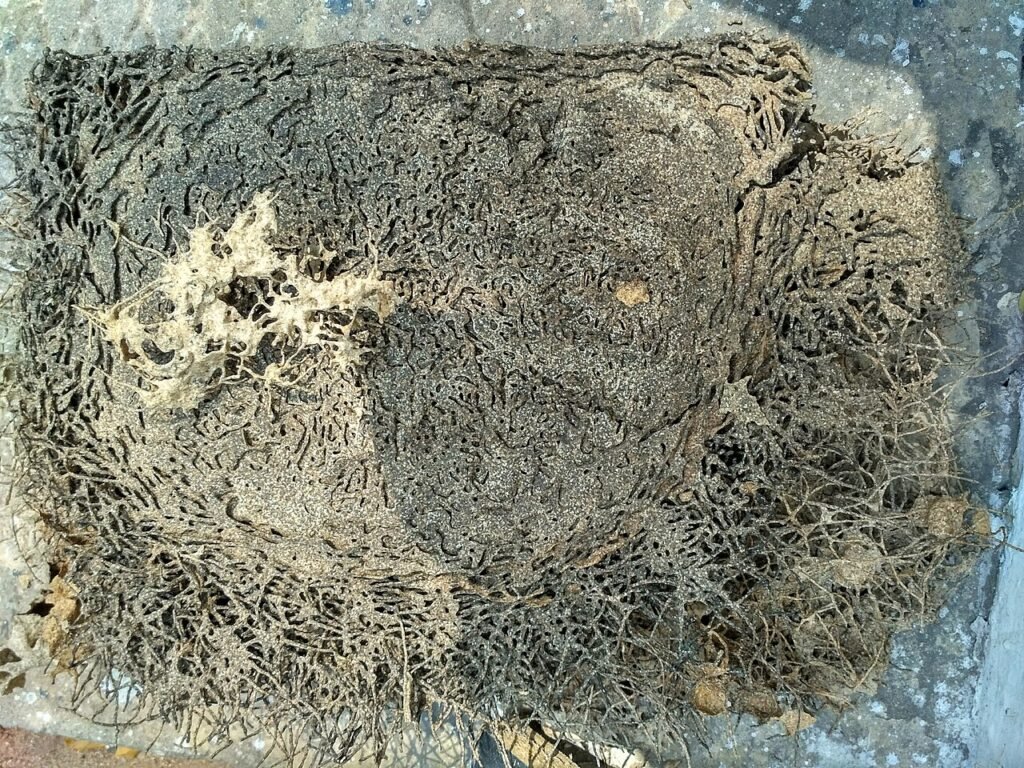
Subterranean termites need moisture to survive. They can’t be exposed to open air for long, so they build mud tubes — pencil-thin tunnels made of soil, wood particles, and saliva — to travel between the soil and the wood they’re feeding on.
Check your foundation walls, especially in the basement or crawl space. Look along the concrete where it meets the wood sill plate. Look behind stored boxes, near floor joists, around plumbing penetrations. Mud tubes are tan or brown, about the width of a pencil or drinking straw, and they run vertically from the ground up to the wood.
If you find one, break off a section. If termites are still active, you’ll see live workers inside (they’re small, pale, soft-bodied, about the size of a grain of rice). Even if the tube is empty, it’s evidence they’ve been there — and they might come back.
3. Hollow-Sounding Wood
Termites eat wood from the inside out, leaving a thin shell on the surface. Tap on baseboards, door frames, window sills, or support beams with a screwdriver handle. If it sounds hollow or papery instead of solid, that’s a warning sign.
In some cases, you can press gently on the wood and it will give way or crumble. That’s advanced damage. At that point, structural repairs are expensive.
This is especially common in older Toronto homes with wood-framed basements or crawl spaces that don’t get much foot traffic. The termites can work undisturbed for years.
4. Tiny Holes in Wood with Piles of Sawdust (Frass)
Drywood termites — less common in Ontario than subterranean, but present in some areas — leave small exit holes in wood and push out pellet-shaped droppings called frass. It looks like fine sawdust or coffee grounds and piles up below the holes.
Frass is usually tan, brown, or wood-colored. If you see these piles near wooden furniture, trim, or structural beams, inspect closely. Drywood termites don’t need soil contact, so they can infest upper floors, attics, and furniture.
5. Buckling or Blistering Wood Floors
If your hardwood or laminate floor starts to buckle, warp, or blister without an obvious water leak, termites might be the cause. As they hollow out the subfloor or joists beneath, the flooring above loses support and begins to shift.
This is often mistaken for water damage. But if the floor is dry and there’s no plumbing issue, check for termites. It’s a sign of sustained, hidden infestation.
6. Peeling or Bubbling Paint
Termite damage can cause paint to bubble or peel as they eat away the wood underneath. The surface may look fine at first glance, but when you press on it, it feels soft or spongy.
Again, this mimics water damage. The difference: termite damage is localized and doesn’t spread like a water stain would. And it’s often accompanied by other signs — mud tubes, frass, or hollow wood.
7. Cracks in Walls or Ceilings
Advanced termite damage can compromise structural integrity enough to cause visible cracks in drywall or plaster. This usually happens after years of unchecked activity, especially in load-bearing beams or studs.
If you notice new cracks forming near corners, door frames, or along the ceiling line, it’s worth getting a termite inspection to rule out structural pest damage.
What to Do If You See Signs of Termites
Don’t panic, but don’t wait either. Termites don’t stop eating just because you noticed them.
Step 1: Document what you found. Take photos of swarmers, mud tubes, frass, or damaged wood. This helps when you call for an inspection.
Step 2: Don’t disturb the area too much. If you find mud tubes, you can break a small section to check for activity, but leave the rest intact. A professional inspector will want to see the full extent.
Step 3: Call for a professional inspection. Termite treatment isn’t a DIY job. You need someone who can assess the colony size, locate entry points, and recommend a treatment plan — usually liquid termiticides, bait stations, or heat treatment for drywood species.
In Ontario, licensed pest control companies offer free or low-cost inspections ($100-200 for a detailed assessment). It’s worth it. Termite damage can run into the tens of thousands in repair costs if left untreated.
Step 4: Act before spring swarming ends. April through June is when swarmers are active. If you’re seeing them now, the colony is mature and actively reproducing. Treating now prevents new colonies from establishing.
We offer same-day termite inspection across the GTA — Toronto, Brampton, Mississauga, Vaughan, Scarborough, and beyond. We’ll confirm whether you have termites, show you the damage, and walk through treatment options that actually work.
Can You Prevent Termites?
You can’t eliminate the risk entirely — termites are native to Ontario and live in soil all around us. But you can make your home less inviting.
Reduce wood-to-soil contact. Don’t let wooden deck posts, siding, or firewood sit directly on the ground. Use concrete supports or metal brackets.
Fix moisture problems. Termites need moisture. Repair leaky pipes, improve drainage around your foundation, and use a dehumidifier in damp basements.
Remove wood debris. Old stumps, scrap lumber, and mulch piles near your foundation are termite magnets. Clear them out.
Seal foundation cracks. Small cracks in your foundation give termites an entry point. Seal them with hydraulic cement or caulk.
Get an annual inspection if you’re in a high-risk area. Older homes, homes with crawl spaces, and homes near wooded lots in the GTA are at higher risk. An annual check ($100-150) catches problems early.
Why Spring Is Termite Season (and Why You’re Seeing Them Now)
Termite colonies are active year-round, but spring is when they swarm. After a long winter underground, warmer soil temperatures in April and May trigger the reproductive cycle. Winged termites leave the nest, mate, shed their wings, and try to start new colonies.
Swarming usually happens on warm, humid days after rain — exactly the kind of weather we get in late April and May across Southern Ontario. That’s why homeowners in Toronto, Mississauga, Vaughan, and Brampton tend to notice termites in spring even if the colony has been there for years.
If you see swarmers inside your home, the colony is close — within a few meters of your foundation, or already inside your walls.
FAQs About Termite Signs and Inspections
When is termite season in Ontario?
Termite swarmers emerge in late April through June in Ontario, especially after warm spring rain. This is when you’re most likely to spot winged termites near windows or light sources.
What do termite droppings look like?
Termite droppings (frass) look like tiny wood-colored pellets or sawdust piles. You’ll typically find them below exit holes in wood or along baseboards where drywood termites are active.
Can I have termites and not know it?
Yes. Termites can damage a home for years before homeowners notice. They eat wood from the inside out, so exterior surfaces often look fine until the damage is severe.
How much does a termite inspection cost in Ontario?
Most pest control companies in the GTA offer free termite inspections or charge $100-200 for a detailed assessment. It’s worth it — termite damage costs Ontario homeowners thousands in repairs.
Are there termites in Toronto?
Yes. The Eastern Subterranean Termite is common across Southern Ontario, including Toronto, Mississauga, Brampton, and surrounding GTA areas. Warmer springs are expanding their range.
Final Word: Don’t Wait
Termites don’t announce themselves. They don’t make noise. They don’t bite. They just eat, quietly, until the damage is done.
If you’re seeing any of the signs above — swarmers, mud tubes, hollow wood, frass — get an inspection this week. Spring is when termite activity peaks, and it’s also the best time to treat before new colonies establish.
We’ve seen too many GTA homes with structural damage that could’ve been avoided with an early catch. Don’t be one of them. If you’re in Toronto, Brampton, Vaughan, Mississauga, or anywhere across the GTA and you think you might have termites, call us. We’ll send someone out today.