# Carpenter Ant Control in Ontario — Why Spring Matters
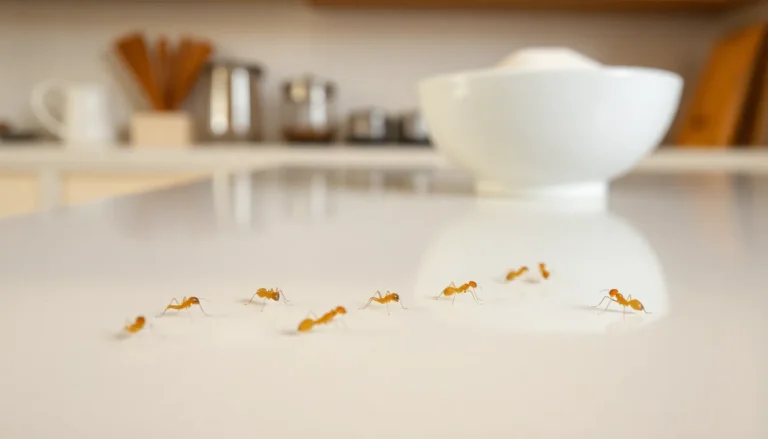
You saw a few large black ants near the back door last week. Then you saw more this morning — bigger than normal ants, moving around the window frame in your kitchen. Now you’re wondering if they’re just passing through or if there’s something worse happening inside your walls.
That’s carpenter ants. And if you’re seeing them in April or May across Ontario, it’s not a coincidence.
Spring is when carpenter ant colonies wake up, send out scouts, and start expanding. The ants you see inside your house aren’t the problem — they’re the symptom. The real problem is the colony nesting somewhere in your home’s wooden structure, slowly hollowing it out.
Here’s what you need to know, and when it’s time to act.
## What Carpenter Ants Actually Do
Carpenter ants don’t eat wood — termites do. But carpenter ants excavate wood to build their nests. They chew through structural lumber, joists, door frames, window sills, and deck posts to create smooth tunnels and galleries where the colony lives.
Over time, this weakens the wood. Beams sag. Floors develop soft spots. Door frames crack. The damage can cost thousands to repair if it goes unchecked for years.
The colony itself can have 10,000 to 50,000 ants. Most of them never leave the nest. The ones you see inside your home are foragers looking for food — usually sugary liquids or protein from dead insects. If you’re seeing foragers regularly, the nest is close.
## Why Carpenter Ants Show Up in Spring
Carpenter ants overwinter in a dormant state. When temperatures consistently hit 10-15°C in April and May, the colony wakes up. Workers start foraging for food. The queen resumes laying eggs. And mature colonies produce winged reproductive ants (swarmers) that fly out to start new colonies.
If you see winged ants indoors in spring, that’s a major red flag. It means there’s an established colony inside your home — not just a few scouts that wandered in from outside.
Spring is also when carpenter ants are most visible. They’re active, they’re hungry, and they’re expanding. This is the best time to catch an infestation early, before the colony grows and spreads to multiple locations in your house.
## Signs You Have Carpenter Ants in Ontario
### 1. Large Black Ants Indoors
Carpenter ants are big — 6 to 13 millimeters long. They’re usually black, but some species in Ontario are dark red or a combination of red and black. If the ants you’re seeing are noticeably larger than the tiny brown pavement ants common in the GTA, and they’re black, you’re likely dealing with carpenter ants.
### 2. Sawdust Piles (Frass)
Carpenter ants push wood shavings, dead insects, and debris out of their tunnels. This creates small piles of fine sawdust, called frass, near baseboards, window sills, or anywhere they’re nesting. The piles look like coarse sawdust mixed with tiny ant body parts.
If you see frass, the nest is nearby — probably within a few meters.
### 3. Rustling Sounds in Walls
When a carpenter ant colony gets large, you can sometimes hear them. It sounds like faint rustling or crinkling paper, especially at night when the house is quiet. Listen near walls, ceilings, or anywhere you suspect a nest.
### 4. Winged Ants in Spring
Winged carpenter ants (swarmers) emerge from mature colonies in late spring. If you see winged ants indoors — especially near windows, doors, or light fixtures — that’s confirmation of an indoor nest. Swarmers don’t fly far, so if they’re inside, the colony is too.
### 5. Wood Damage Around Moisture
Carpenter ants prefer damp or water-damaged wood. Check around leaky roofs, plumbing fixtures, poorly sealed windows, and anywhere water has soaked into wood. If the wood sounds hollow when you tap it, or if you see small slit-like openings, that’s carpenter ant activity.
## Where Carpenter Ants Nest in Ontario Homes
Carpenter ants need moisture to survive, so they target areas where wood stays damp or has been water-damaged:
– **Roof eaves and soffits** — especially if there’s been roof damage or ice dam leaks
– **Around windows and doors** — where caulking has failed and water seeps in
– **Inside walls near bathrooms or kitchens** — plumbing leaks create perfect nesting conditions
– **Deck posts and railings** — ground contact + moisture = prime carpenter ant real estate
– **Tree stumps and woodpiles** — outdoor nests that eventually send foragers into the house
The outdoor nest is called the parent colony. The indoor nest is called a satellite colony. Satellite colonies don’t have a queen, but they’re connected to the parent colony and just as damaging.
If you have both, you need to eliminate both. Killing the indoor ants won’t stop the problem if the outdoor parent colony is still active.
## What Carpenter Ant Damage Looks Like
Carpenter ant damage develops slowly. You won’t see it overnight. But over months and years, the wood becomes structurally compromised.
Here’s what advanced damage looks like:
– **Hollow-sounding wood** — tap it and it sounds empty
– **Sagging floors or ceilings** — weakened beams lose their load-bearing strength
– **Cracks in drywall or plaster** — the framing behind it has shifted
– **Doors or windows that stick** — the frames are no longer square
– **Soft spots in decks or porches** — the wood is honeycombed inside
By the time you see visible structural damage, the infestation has been active for years. That’s why catching it early — in spring, when you first see ants — matters.
## How to Get Rid of Carpenter Ants (The Right Way)
DIY treatments don’t work well for carpenter ants. Spraying the ants you see kills the foragers, but it doesn’t reach the nest. The colony keeps growing, and you’re back to square one in a few weeks.
Professional carpenter ant control involves:
### 1. Inspection and Nest Location
We find where the colony is nesting — both indoors and outdoors. That means checking attics, crawl spaces, wall voids, and exterior wood. Moisture meters and thermal imaging help pinpoint hidden nests.
### 2. Targeted Treatment
Once we locate the nest, we treat it directly. That includes applying residual insecticide to nest sites, treating satellite colonies, and baiting foraging trails so worker ants carry the treatment back to the queen.
### 3. Exterior Perimeter Protection
We treat the exterior foundation, deck posts, tree stumps, and woodpiles to eliminate outdoor nests and prevent re-infestation.
### 4. Exclusion and Prevention
We identify how ants are getting inside — gaps around windows, cracks in the foundation, utility line entry points — and recommend sealing those access points.
Treatment takes 1-2 visits depending on the size of the infestation. Most infestations are eliminated within 2-4 weeks.
## What It Costs (And What Happens If You Wait)
Carpenter ant treatment in Ontario typically costs $300 to $800 depending on the size of your home and the severity of the infestation. That includes inspection, treatment of indoor and outdoor nests, and a follow-up visit if needed.
If you wait and let the infestation grow, the cost shifts from pest control to structural repair. Replacing damaged floor joists, reframing windows, or rebuilding sections of a deck can cost $2,000 to $10,000 or more.
Carpenter ants don’t move fast, but they’re persistent. The longer they nest in your home, the more damage they do.
## Preventing Carpenter Ants After Treatment
Once the infestation is gone, here’s how to keep it that way:
– **Fix water leaks immediately** — repair roof leaks, plumbing leaks, and failed window seals
– **Remove wood-to-ground contact** — deck posts shouldn’t sit directly on soil; use concrete footings
– **Store firewood away from the house** — at least 6 meters away, elevated off the ground
– **Trim tree branches** — branches touching your roof or siding create a bridge for ants
– **Remove dead trees and stumps** — these are prime nesting sites for outdoor colonies
– **Seal cracks and gaps** — caulk around windows, doors, and utility lines
Carpenter ants need moisture. If you eliminate damp wood and outdoor nesting sites, they have no reason to target your home.
## When to Call for Carpenter Ant Control in Ontario
If you’re seeing large black ants indoors in spring — especially more than a few, or especially around wood — don’t wait. The colony is active right now, and treatment is most effective when the ants are foraging.
We service Toronto, Vaughan, Brampton, and the entire GTA. We show up the same day, locate the nest, and eliminate the colony before it has a chance to spread.
Carpenter ants won’t go away on their own. But they are treatable, and spring is the best time to act.
If you’re seeing carpenter ants in your home, get a free quote or call us today. We’ll inspect your property, locate the nest, and get rid of the colony before it does serious damage.
—
**Related:** Ant Extermination Services