
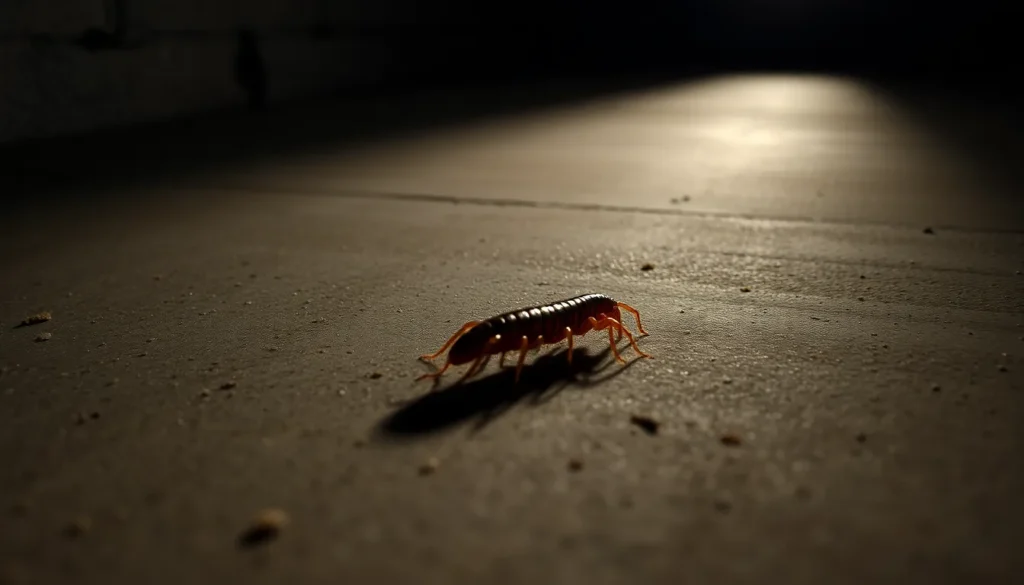
You flipped on the basement light and saw it — a long, thin creature with what looked like a dozen legs scurrying across the concrete floor toward the drain. That fast movement, those legs, that almost alien shape. If you’re seeing centipedes in your basement, you’re not alone. It’s one of the most common pest calls we get in the Greater Toronto Area, especially in older homes with stone foundations.
Here’s the thing: centipedes in your basement aren’t random. They’re there because your basement is giving them exactly what they need — moisture, darkness, and other smaller bugs to eat. Let’s talk about why they show up, what they mean for your home, and how to get rid of them for good.
What Are House Centipedes?
The centipedes you’re seeing in your basement are most likely house centipedes (Scutigera coleoptrata). They’re not actually insects — they’re arthropods, which means they’re more closely related to spiders than to beetles or ants.
House centipedes are pale yellowish-brown with three dark stripes running down their backs. Their most distinctive feature is their 15 pairs of long, thin legs that make them look bigger than they are. A full-grown house centipede is usually about an inch to an inch and a half long, but those legs make them seem massive when they’re darting across your floor at night.
They move fast — up to 0.4 meters per second according to research from Penn State’s entomology department. That’s why when you spot one, it seems to disappear in a blink.
Why Centipedes Love Your Basement
Centipedes aren’t in your basement by accident. Basements in Ontario homes — especially in Toronto, Mississauga, and Brampton — create the perfect environment for them. Here’s what draws them in:
Moisture
Centipedes need moisture to survive. They don’t have the waxy coating that insects like cockroaches have, which means they dry out quickly. Your basement, with its concrete walls, minimal airflow, and tendency to trap humidity, is ideal for them. Leaky pipes, foundation cracks, window wells that collect water, or just general dampness from poor ventilation — all of these create the humid conditions centipedes thrive in.
Food Supply
Centipedes are predators. They eat other bugs. If you’ve got centipedes in your basement, it usually means you’ve got other pests too — silverfish, spiders, carpet beetles, or drain flies. Centipedes hunt at night, using their venomous front legs to catch and paralyze their prey. So if you’re seeing centipedes regularly, it’s a sign that there’s an active food source down there.
Dark, Undisturbed Spaces
Centipedes are nocturnal and hide during the day. Basements offer plenty of hiding spots — behind stored boxes, under old furniture, in the gaps between stored lumber, around the furnace, or in the cracks of an unfinished stone foundation. The less you use your basement, the more attractive it is to them.
Are Centipedes Dangerous?
Let’s be clear: house centipedes are creepy, but they’re not dangerous to humans. They can bite if you try to pick one up, but it’s rare, and the bite is usually no worse than a bee sting — a little pain, maybe some swelling, but nothing serious.
The bigger issue isn’t the centipedes themselves. It’s what they represent. If you’ve got enough centipedes in your basement to notice them regularly, you’ve got a moisture problem and a secondary pest problem. And both of those can lead to bigger issues — mold growth, wood rot, structural damage, and more pests moving in.
How to Get Rid of Centipedes in Your Basement
Getting rid of centipedes isn’t about killing every one you see. It’s about removing the conditions that make your basement attractive to them. Here’s what actually works:
Reduce Moisture
This is the most important step. Run a dehumidifier in your basement and keep the humidity below 50%. Fix leaky pipes, seal cracks in the foundation, and improve ventilation. If you’ve got window wells, make sure they drain properly. If water pools against your foundation after rain, regrade the soil or extend your downspouts.
Eliminate Their Food Source
If centipedes are in your basement, they’re eating something. You need to deal with the other pests first. Check for silverfish in old books and cardboard boxes. Look for spiders in corners and behind storage. Inspect drains for flies. Once you remove what they’re eating, the centipedes will leave or starve.
Seal Entry Points
Centipedes get in through cracks in the foundation, gaps around basement windows, and spaces where pipes enter the house. Use caulk or expanding foam to seal these openings. Pay special attention to the area where your foundation meets the wall framing — that’s a common entry point.
Clear the Clutter
The more stuff you have piled up in your basement, the more hiding spots you’re giving them. Store things in sealed plastic bins instead of cardboard boxes. Keep stored items off the floor. Create clear paths and reduce the number of dark, untouched corners.
Use Targeted Treatments
If you’ve done all of the above and you’re still seeing centipedes, it’s time for a professional treatment. We use a combination of residual insecticides in cracks and crevices, dusts in wall voids, and targeted baits for the other pests they’re feeding on. It’s not a one-and-done spray — effective centipede control is about treating the whole basement ecosystem.
When to Call a Professional
You should call a pest control company if:
- You’re seeing centipedes daily, or more than one at a time
- You’ve tried DIY methods for a month and they’re still showing up
- You’re seeing other pests in addition to centipedes
- Your basement has a persistent moisture problem you can’t solve on your own
- You’re finding centipedes in living areas, not just the basement
We deal with centipede problems all the time in Toronto-area basements. The treatment plan usually involves identifying moisture sources, treating for secondary pests, applying residual products in harborage areas, and sealing entry points. Most homes see a significant reduction within two weeks, and complete control within a month.
FAQ About Centipedes in Basements
Do centipedes mean my house is dirty?
No. Centipedes are attracted to moisture and food, not dirt. You can have a spotless house and still get centipedes if your basement is damp and has other bugs.
Will centipedes go away on their own?
Not unless the conditions change. If your basement stays damp and full of other bugs, centipedes will keep coming back. You have to address the root causes.
How many centipedes is too many?
If you’re seeing more than one or two a week, or if you’re seeing them during the day, you’ve got an active infestation and should call a professional.
Can centipedes come up from the drain?
It’s possible, especially if you have floor drains that don’t get used often and dry out. Pour water down unused drains once a month to keep the trap full and prevent pests from coming up.
Are centipedes worse in certain seasons?
You’ll see more centipedes in spring and fall when they’re most active and looking for shelter. But in a basement with stable temperature and moisture, they can be active year-round.
Final Thoughts
Centipedes in your basement are a symptom, not the disease. They’re telling you that your basement has moisture issues and other pests. The good news is that once you fix those underlying problems, the centipedes leave on their own.
If you’re dealing with centipedes in your Mississauga, Brampton, or Toronto basement and you want them gone, we can help. We’ll identify the moisture sources, treat for the pests they’re feeding on, and seal the entry points. Most centipede jobs are wrapped up in one or two visits. Get a free quote or give us a call — we’ll have someone out the same day.