# Earwig Infestation: What to Do When They Invade Your Home
You came downstairs to grab something from storage. Flipped on the basement light. And there they were—clustered near the drain, scuttling along the baseboards, those unmistakable pincers at the tail end.
Earwigs.
Let’s clear something up right away: they look scary, but they’re not dangerous. They won’t crawl in your ears while you sleep (that’s a medieval myth). They rarely bite. And when they do pinch, it’s no worse than a mild nip—you’ll survive.
But if you’re seeing dozens of them in your basement or around your foundation, you’ve got an earwig infestation. And while they’re not a health risk, they’re a sign that something’s wrong with your home’s moisture balance. Left unchecked, that moisture problem can invite worse pests—and even structural damage.
Here’s what you need to know, what you can do yourself, and when to call for help.
## Why Earwigs Are in Your House (And Why It’s Usually a Basement Problem)
Earwigs don’t want to be in your house. They’d rather be outside under mulch, logs, or leaf piles where it’s damp and dark. But Ontario weather forces them indoors—especially during late summer dry spells or heavy fall rains.
Here’s what draws them in:
**Moisture.** Earwigs need humidity to survive. If your basement has:
– Foundation cracks
– Poor drainage around the perimeter
– A damp crawlspace
– Leaking pipes or a sump pump that’s not draining properly
– High indoor humidity (above 60%)
…then it’s earwig heaven. They’ll squeeze through cracks as small as a credit card and set up shop near your floor drains, laundry area, or storage boxes.
**Outdoor conditions.** August and September bring peak earwig activity across the GTA. Hot, dry weather drives them toward sprinklers and shaded foundation walls. Heavy rain floods their outdoor hiding spots, pushing them inside.
**Old homes = more entry points.** Older Toronto, Brampton, and Vaughan homes often have:
– Uneven foundation settling (creates gaps)
– Cracked window wells
– Wooden siding gaps
– Weatherstripping that’s deteriorated
New builds aren’t immune either—poor grading and overwatered landscaping create the same moisture conditions.
## What Earwigs Actually Do (Spoiler: Not Much)
Earwigs are mostly harmless. They eat decaying plant matter, algae, and occasionally other small insects. They’re not termites—they won’t destroy your home. They’re not bed bugs—they won’t bite you in your sleep.
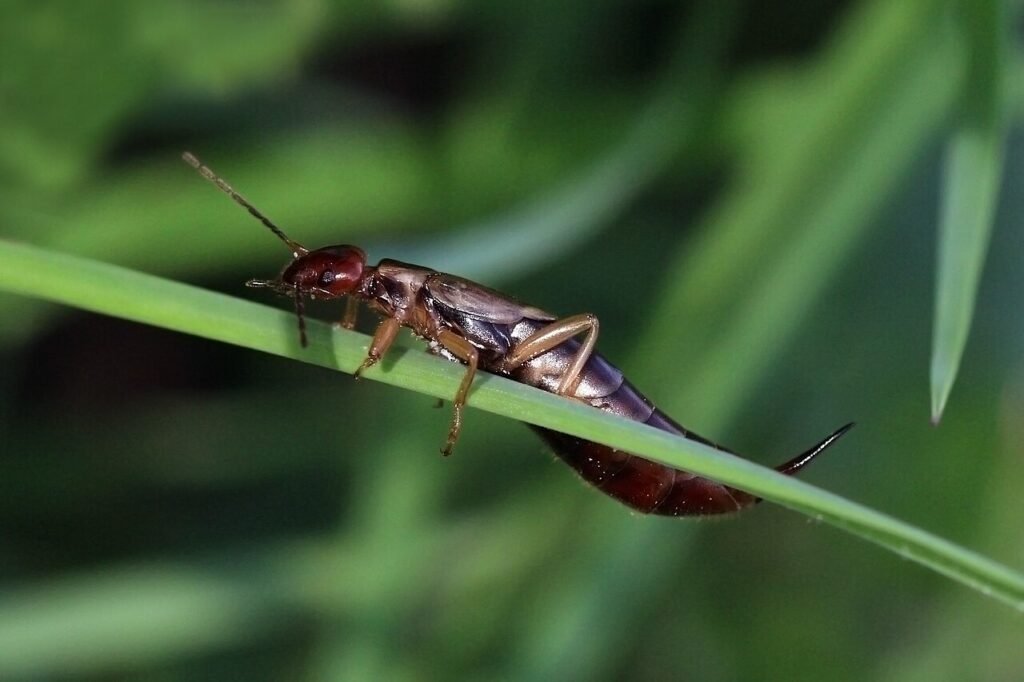
The pincers (cerci) at the end of their abdomen? Mostly for show. Males use them to wrestle other males during mating season. They’ll pinch if you grab one, but it’s more startling than painful.
The real issue with an earwig infestation isn’t the bugs themselves—it’s what they indicate. A basement full of earwigs means you have moisture intrusion. And moisture attracts:
– Silverfish
– Centipedes
– Cockroaches (especially in older urban homes)
– Mold and mildew
– Wood rot
So yes, deal with the earwigs. But more importantly, deal with the moisture problem.
## How to Get Rid of Earwigs (The Right Way)
### Step 1: Reduce Moisture
This is non-negotiable. You can kill every earwig in your basement today, but if the moisture issue persists, more will move in tomorrow.
**Indoors:**
– Run a dehumidifier in the basement (keep humidity below 50%)
– Fix leaking pipes, especially around the laundry area
– Ensure your sump pump is draining away from the foundation
– Seal foundation cracks with hydraulic cement or polyurethane caulk
– Improve ventilation (open basement windows on dry days, use exhaust fans)
**Outdoors:**
– Extend downspouts at least 6 feet away from the foundation
– Re-grade soil around the perimeter so it slopes away from the house
– Clear mulch, leaves, and firewood piles away from foundation walls (at least 12 inches)
– Trim shrubs and ground cover that trap moisture against the house
### Step 2: Seal Entry Points
Walk the perimeter of your home—inside and out. Look for:
– Cracks in foundation walls
– Gaps around basement windows
– Openings where utility lines enter the house (cable, gas, water)
– Worn door sweeps and weatherstripping
Seal cracks with caulk or foam. Replace door sweeps. Install window well covers if you don’t have them.
### Step 3: Remove Hiding Spots
Inside, earwigs hide in:
– Cardboard boxes (especially damp ones)
– Old newspapers and magazines
– Piles of clothing or linens stored on the floor
– Behind stored furniture
Outside, they hide under:
– Mulch (especially thick layers near the foundation)
– Stacks of firewood
– Potted plants sitting directly on the ground
– Patio stones and landscape timbers
Clear clutter. Store items off the floor. Move outdoor debris piles away from the house.
### Step 4: Trap and Remove
If you’re dealing with dozens of earwigs, you can reduce the population quickly with traps:
**DIY oil trap:**
– Pour 1-2 inches of vegetable oil into a shallow container (yogurt cup, tuna can)
– Add a drop of dish soap
– Place it near where you see earwigs (floor drain, corner of basement)
– Check and empty daily
**Rolled newspaper trap:**
– Dampen a newspaper and roll it loosely
– Leave it on the basement floor overnight
– In the morning, earwigs will be hiding inside
– Shake them into a bucket of soapy water or take outside and dispose
These won’t solve an infestation, but they’ll give you breathing room while you fix the moisture issue.
### Step 5: Insecticide (If Needed)
For moderate to heavy infestations, a perimeter treatment can help:
– Spray a barrier insecticide (permethrin-based) around the foundation, door thresholds, and basement window frames
– Apply diatomaceous earth in cracks, along baseboards, and near floor drains (food-grade only if you have pets)
This works best *after* you’ve sealed entry points and reduced moisture. Otherwise, you’re just killing the current batch—more will follow.
## When DIY Isn’t Enough
You’ve sealed cracks. You’re running a dehumidifier. You’ve set traps. And you’re still seeing earwigs every day.
That means one of two things:
1. **You missed the source.** There’s a hidden moisture issue you haven’t found—maybe a slow foundation leak, a clogged exterior drain tile, or a vapor barrier problem in the crawlspace.
2. **The population is too large.** If you’re seeing 20+ earwigs daily, they’re breeding on-site. Eggs hatch in spring, nymphs mature by late summer—you might be dealing with multiple generations.
At that point, it’s time to call [professional pest control](/services/pest-control). We’ll:
– Inspect for hidden moisture sources (thermal imaging if needed)
– Apply targeted perimeter and crack-and-crevice treatments
– Treat outdoor harborage areas (mulch beds, window wells, foundation plantings)
– Give you a clear moisture-control action plan
For homeowners in [Toronto](/areas/toronto), [Brampton](/areas/brampton), and [Vaughan](/areas/vaughan), we’re familiar with the specific foundation and grading issues that cause basement earwig problems. Older Toronto homes with limestone foundations, Brampton’s clay soil drainage issues, Vaughan’s newer builds with settling foundations—we’ve seen it all.
## How to Prevent Earwigs from Coming Back
Once you’ve cleared the infestation, keep them out:
**Year-round:**
– Keep gutters clean and downspouts extended
– Maintain basement humidity below 50%
– Inspect and seal new foundation cracks annually
**Spring (before peak season):**
– Thin out mulch near the foundation (2-3 inches max)
– Move firewood piles to the back of the property
– Trim vegetation touching the house
**Late summer (peak earwig activity):**
– Reduce outdoor watering near the foundation
– Clear leaf litter and yard debris promptly
– Check door sweeps and re-seal if needed
## The Bottom Line
An earwig infestation isn’t dangerous, but it’s annoying—and it’s a symptom of a moisture problem you need to fix. In Ontario’s climate, especially in older GTA homes, basement moisture is a common issue. Earwigs are just the visible sign.
Control moisture, seal entry points, and remove outdoor hiding spots. That combination will stop most infestations. If you’re still seeing them after two weeks of effort, or if you’re finding them in multiple rooms, bring in a professional. It’s faster, and it addresses the root cause—not just the bugs.
Got earwigs in your basement right now? Don’t panic. They’re not going to hurt you. But don’t ignore them either—they’re telling you something about your home’s foundation and drainage. Fix it now, and you won’t be dealing with worse pests (or mold) later.
## Frequently Asked Questions
**Do earwigs actually crawl in your ears?**
No. This is a myth. Earwigs have no interest in human ears. The name comes from an old European superstition, not from actual behavior.
**Are earwigs dangerous to humans?**
No. Earwigs rarely bite humans, and when they do, it’s no worse than a mild pinch. They don’t transmit diseases and aren’t considered a health risk.
**Why are there so many earwigs in my basement?**
Earwigs are drawn to moisture and darkness. Ontario basements—especially older ones with foundation cracks or poor drainage—provide the damp environment they love. Fix moisture issues and seal entry points to stop them.