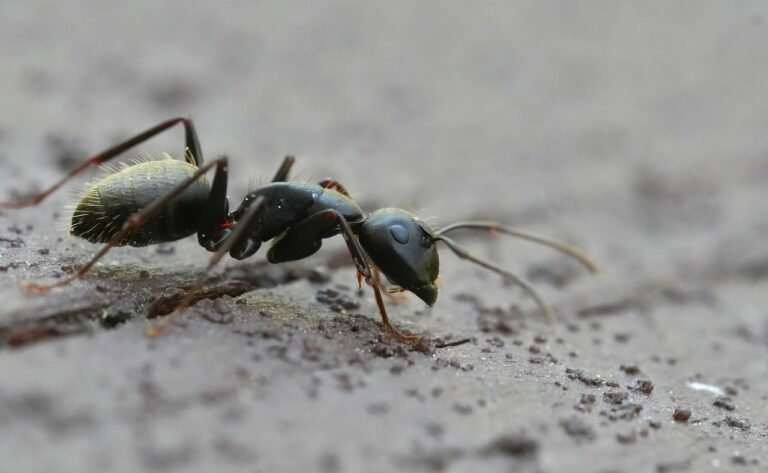
You’re standing on your deck in early May and you notice it. Perfect half-inch holes drilled into the railing. Sawdust piles underneath. And those big black bees hovering near the eaves, aggressively buzzing at anyone who gets close.
That’s carpenter bees. And if you’ve got untreated wood on your property — deck railings, fence posts, eaves, fascia boards — they’re going to keep coming back every spring.
The good news? Carpenter bee prevention is straightforward if you know what to do and when to do it. This guide covers exactly how to protect your Ontario home from carpenter bee damage, what works, what doesn’t, and when to call in professional treatment.
What Are Carpenter Bees and Why Do They Target Ontario Homes?
Carpenter bees look like oversized bumblebees — black, shiny, about an inch long. But unlike bumblebees, they don’t build hives. They bore into bare wood to create nesting tunnels where they lay eggs.
Here’s what makes Ontario homes especially vulnerable:
Wood-heavy construction. Homes across Vaughan, Brampton, Richmond Hill, and the rest of the GTA are built with a lot of exposed softwood — cedar decks, pine eaves, untreated fence posts. Carpenter bees prefer softwoods because they’re easier to tunnel into.
Spring emergence timing. Ontario’s spring (late April through May) aligns perfectly with carpenter bee mating season. When temperatures hit 15-20°C consistently, adult bees emerge from winter hibernation and immediately start looking for nesting sites.
Suburban expansion. New subdivisions mean fresh wood. If your neighborhood was built in the last 10-15 years and the builder used untreated or unpainted wood for trim, railings, or eaves, you’re in prime carpenter bee territory.
The bees themselves aren’t aggressive toward people — the males that hover and buzz can’t even sting. But the damage they cause is real. A single bee creates a 6-10 inch tunnel. When the same hole gets reused year after year, those tunnels branch out into a network that weakens structural wood.
Signs You Have a Carpenter Bee Problem
Carpenter bees leave obvious clues:
Perfectly round holes. About the diameter of your pinky finger (1/2 inch), drilled into wood at a slight upward angle. You’ll usually find them on the underside of deck railings, eaves, or fence posts.
Sawdust piles. Fresh yellow sawdust directly below the holes. If the sawdust is fresh (not weathered gray), that means active boring.
Hovering bees. Male carpenter bees patrol their territory aggressively. They’ll hover near your face, buzz loudly, and chase off intruders. They can’t sting, but they’re intimidating.
Staining below holes. Yellow or brown streaks below the bore holes. This is bee feces and a sign of active nesting.
Woodpecker damage. Woodpeckers eat carpenter bee larvae. If you’re seeing woodpeckers pecking at your eaves or railings, they’re hunting carpenter bee nests.
If you’re seeing multiple bore holes, fresh sawdust, and bees actively flying around your property in late April or May, you’ve got an active infestation.
Carpenter Bee Prevention: What Actually Works
Prevention is about making your wood unattractive to carpenter bees before they start boring. Here’s what works, in order of effectiveness.
1. Paint or Stain All Bare Wood
This is the single most effective prevention method. Carpenter bees strongly prefer bare, untreated wood. Painted or stained wood is much less appealing.
What to use:
- Oil-based exterior paint (best option)
- Polyurethane or varnish stain
- Solid-color deck stain
What doesn’t work:
- Water-based stains (too thin, wears off quickly)
- Clear wood sealers (bees will still bore through)
Where to apply:
- Deck railings (especially underside)
- Eaves and fascia boards
- Fence posts (top caps especially)
- Any exposed softwood trim
Apply two coats. Bare wood is an invitation. Painted wood is a deterrent.
2. Fill Old Bore Holes
Carpenter bees reuse old holes. If your property has existing bore holes from previous years, you need to fill them — but timing matters.
Do this in late fall (October-November):
- Wait until all bee activity has stopped (after first frost)
- Use wood putty or caulk to fill each hole completely
- Sand smooth and paint over
Why late fall? If you fill holes in spring or summer while bees are active, they’ll just bore new holes right next to the filled ones. Wait until they’ve left for winter.
3. Replace Damaged or Rotting Wood
Carpenter bees love soft, weathered wood. If you’ve got rotting deck boards, split fence posts, or water-damaged eaves, that’s where they’ll target first.
Replacement checklist:
- Replace any wood that’s soft to the touch or visibly rotting
- Use pressure-treated lumber for fence posts and deck framing
- Consider composite decking materials (carpenter bees don’t bore into composite)
- Paint or stain all replacement wood immediately
4. Apply Preventative Treatment in Early Spring
If you’ve had carpenter bee problems in the past, you can apply a residual insecticide to high-risk areas in early April (before bees emerge).
What to treat:
- Underside of deck railings
- Eaves and soffits
- Fence post tops
- Any previous bore hole locations
Products that work:
- Permethrin-based sprays (Tempo, Dragnet)
- Cypermethrin residual treatments
Important: This is a preventative treatment, not a cure. If bees are already boring, you need professional treatment to eliminate the nests.
5. Maintain Your Property Year-Round
Carpenter bee prevention isn’t a one-time fix. It’s ongoing maintenance.
Spring (April-May):
- Inspect all wood for new bore holes
- Watch for bee activity around eaves and decks
- Apply preventative treatment if you’ve had issues before
Summer (June-August):
- Monitor for late-season boring (some bees nest into July)
- Keep wood painted and sealed
Fall (September-November):
- Fill any new bore holes after first frost
- Repair or replace damaged wood before winter
Winter (December-March):
- Plan spring prevention (buy paint, caulk, treatment products)
When to Call a Professional
DIY prevention works if you catch carpenter bees early. But if you’re dealing with an active infestation, professional treatment is the faster, more effective option.
Call us if:
- You’re seeing 5+ bore holes on your property
- Bees are actively boring (fresh sawdust appearing daily)
- You’ve tried DIY methods but bees keep coming back
- You’re seeing structural damage (weakened railings, sagging eaves)
- Woodpeckers are destroying your wood trying to get at bee larvae
Professional carpenter bee control involves:
- Identifying all active nest sites
- Direct nest treatment to eliminate larvae and adults
- Residual barrier application to prevent re-infestation
- Wood treatment recommendations to protect long-term
We treat carpenter bee infestations across Vaughan, Brampton, Richmond Hill, and the rest of the GTA. Same-day service available.
The Bottom Line on Carpenter Bee Prevention
Carpenter bees are predictable. They emerge in late April, they target untreated wood, and they reuse old holes. That predictability makes prevention straightforward:
- Paint or stain all bare wood (oil-based paint works best)
- Fill old bore holes in late fall after bees are gone
- Replace soft, rotting wood before spring
- Apply preventative treatment in early April if you’ve had problems before
- Monitor your property in spring and act fast if you see new activity
If you’re in the GTA and you’re noticing carpenter bee activity on your property right now — holes, sawdust, hovering bees — we can treat your property today. Don’t wait until the tunnels spread and the damage gets worse.
Get professional carpenter bee treatment today. We serve the entire Greater Toronto Area with same-day service.