# Spring Ant Invasion — Why GTA Homes Get Hit Every April
You walked into your kitchen last night and saw a line of big black ants marching across the counter. This morning, there were more — near the sink, on the windowsill, crawling up the wall by the deck door. A few had wings.
That’s not a random pest problem. That’s a carpenter ant colony waking up for the season. And if you’re seeing them indoors in April, they’re not just passing through — they’re nesting somewhere close, likely inside your walls or under your deck.
Here’s why spring is carpenter ant season in the GTA, how to tell if you’ve got a real infestation, and when it’s time to stop buying traps from Home Depot and call someone who can actually eliminate the colony.
## Why April Is Carpenter Ant Season in Ontario
Carpenter ants don’t hibernate like bears. They overwinter. The colony burrows deep into their nest — often in rotting wood, tree stumps, or the damp framing inside your walls — and goes dormant when temperatures drop below 10°C.
When spring hits and the temperature climbs back into double digits (usually mid-April in the GTA), the colony wakes up. Workers start foraging for food. And mature colonies — the ones that have been around for 3-5 years — produce winged reproductive ants called swarmers.
Swarmers are the ants you see with wings, usually crawling near windows or baseboards. They’re not there to eat your food. They’re there to fly out, mate, and start new colonies. If you’re seeing winged carpenter ants indoors in spring, it means there’s a mature nest nearby. That nest might be in your attic, your wall void, your deck frame, or a tree stump 50 meters from your house.
And here’s the thing about carpenter ant colonies: they don’t stay small. A single mature colony can have 10,000-20,000 workers. They send out satellite colonies to nearby wood sources. One nest becomes three. Three becomes six. By the time you’re seeing dozens of ants every day, the infestation is already established.
## Carpenter Ants vs Pavement Ants vs Odorous House Ants
Not every ant in your house is a carpenter ant. The GTA has three common indoor ant species, and they’re easy to mix up if you don’t know what to look for.
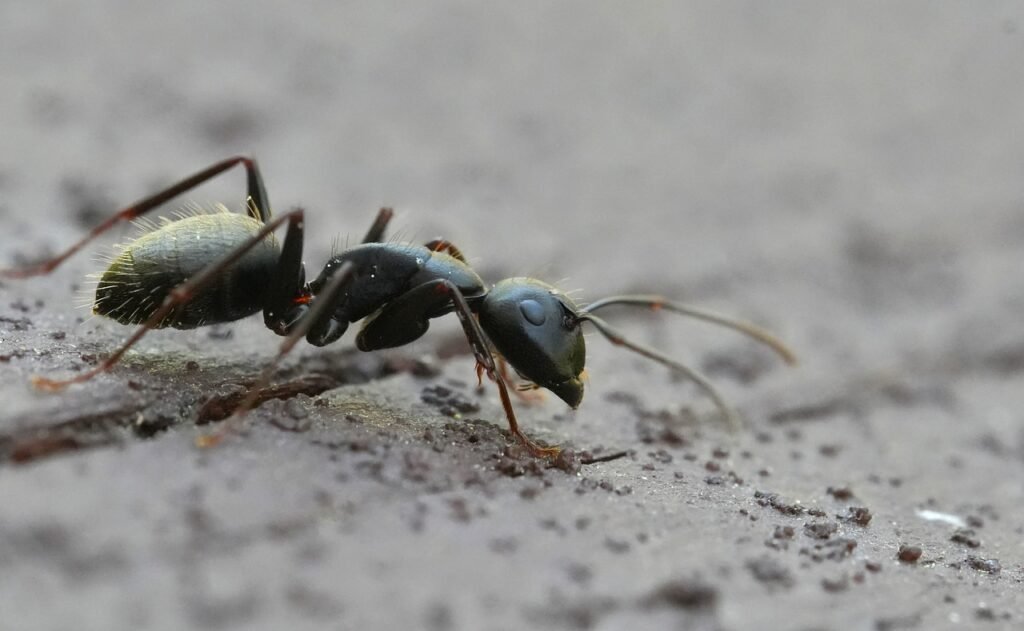
**Carpenter ants** are the big ones — 6-13mm long, which is roughly the size of a grain of rice. They’re black or red-and-black, with a single rounded bump (node) between their thorax and abdomen. They move slowly and deliberately. If you crush one, there’s no smell.
**Pavement ants** are tiny — 2-4mm, light brown or black, with two nodes. You’ll see them in huge numbers near driveways, sidewalks, and foundation cracks. They leave little piles of sand near the cracks they use to get inside. They’re annoying, but they don’t damage your house.
**Odorous house ants** are also small (2-3mm), dark brown, with one node. When you crush them, they smell like rotten coconut. They nest in wall voids and under floors, and they’re attracted to sugar. They don’t damage wood either.
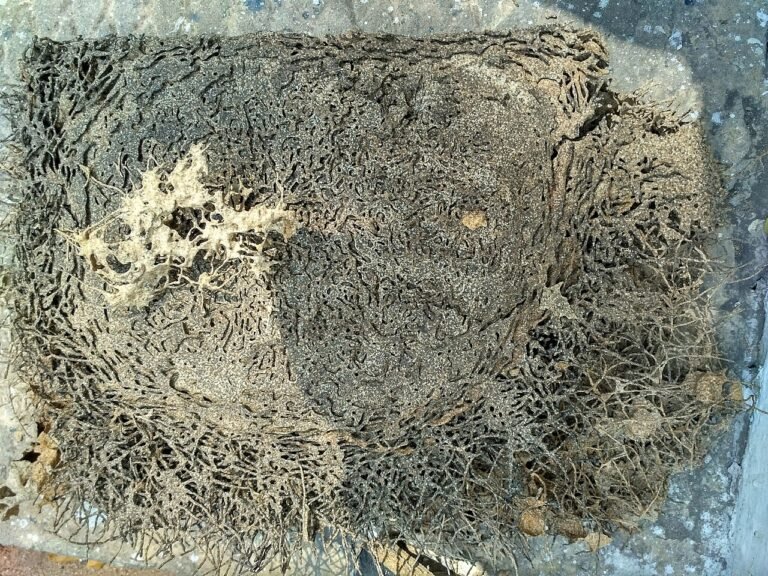
The key difference: **carpenter ants are the only ones that tunnel through wood.** They don’t eat it (that’s termites), but they excavate galleries to expand their nests. Over time, that hollows out structural beams, window frames, and deck posts. In older GTA homes — especially those built before 1990 with wood siding and untreated lumber — carpenter ants can do serious structural damage if left unchecked for years.
If you’re seeing large black ants near wood, near windows, or near moisture sources (bathrooms, kitchens, basements), assume carpenter ants until proven otherwise.
## Why GTA Homes Are Carpenter Ant Magnets
Carpenter ants need two things to start a nest: damp wood and a food source nearby.
The GTA is full of both.
**Older homes with wood siding.** A lot of homes in Toronto, Brampton, and Mississauga were built in the 70s and 80s with wood siding, wood-framed decks, and cedar shingles. That wood is often untreated, and after 30-40 years of freeze-thaw cycles, it’s starting to rot. Rotting wood is soft, easy to excavate, and holds moisture — perfect for carpenter ants.
**Leaky roofs and clogged gutters.** Water damage is the #1 carpenter ant attractant. A roof that leaks into the attic, gutters that overflow and soak the fascia boards, or a downspout that dumps water against the foundation — all of these create damp wood. And damp wood is where carpenter ants start nests.
**Decks and fence posts.** GTA homes love backyard decks. But those decks are often built with pressure-treated lumber that wasn’t sealed properly, or worse, untreated pine. After a few winters of snow and rain, the wood softens. Carpenter ants move in, tunneling through the support posts and joists. You won’t see it from the outside, but if you tap the wood and it sounds hollow, there’s a good chance ants have been working on it.
**Proximity to trees and stumps.** Carpenter ants naturally nest in dead trees, rotting stumps, and firewood piles. If you’ve got a big maple or oak in your yard with a dead branch, or if there’s an old stump near your house, that’s the parent colony. The ants you’re seeing indoors are just foragers — or worse, a satellite nest that’s already established in your walls.
**Mature neighborhoods with mature trees.** Neighborhoods like North York, Etobicoke, Scarborough, and older parts of Vaughan and Brampton have 50-100 year old trees. Those trees are beautiful, but they also drop dead branches, hollow out from rot, and provide perfect nesting sites for carpenter ant colonies. If your house is within 100 meters of one of those trees, you’re in the ant’s foraging range.
## Signs You’ve Got a Carpenter Ant Problem
Here’s how to tell if you’re dealing with a real infestation, not just a few scouts wandering in from outside.
**1. You see large black ants indoors, especially in spring.**
A few ants in your kitchen in July could be random foragers. Dozens of big black ants in April, near wood or moisture sources, is a sign of a nest nearby.
**2. You find sawdust piles (frass) near wood.**
Carpenter ants don’t eat wood — they chew through it and push the debris out of the nest. The result is little piles of fine sawdust, often mixed with dead ant parts and insect fragments. Check under decks, near window frames, along baseboards, and in the attic. If you see frass, there’s an active nest within a few feet.
**3. You hear rustling or crunching sounds in your walls at night.**
Carpenter ant colonies are most active after dark. If you hear faint rustling, scratching, or crunching sounds coming from inside your walls — especially near bathrooms, kitchens, or exterior walls — that’s ants tunneling through wood. Put your ear to the wall and listen. It’s subtle, but once you hear it, you’ll know.
**4. You see winged ants indoors in April or May.**
Swarmers are the reproductive ants that mature colonies produce. If you’re seeing winged ants crawling on your walls, near windows, or clustered on a windowsill, there’s a mature nest somewhere close. Swarmers don’t fly well, so if they’re indoors, the nest is either in your house or within 50-100 meters.
**5. You’ve had carpenter ants before.**
Carpenter ants are territorial. If you had them last year and treated them with DIY bait, there’s a good chance you killed some workers but didn’t eliminate the queen or the satellite nests. The colony survived, overwintered, and came back this spring. Once you’ve had carpenter ants, you’re likely to get them again unless the nest is fully eliminated.
## Prevention Tips for Ontario Climate
You can’t carpenter-ant-proof your house completely, but you can make it a lot less attractive.
**Fix moisture problems first.** Carpenter ants need damp wood. Fix leaky roofs, clean your gutters twice a year, redirect downspouts away from the foundation, and fix any plumbing leaks in walls or under sinks. If your basement is damp, run a dehumidifier. Dry wood = no carpenter ants.
**Trim tree branches touching your house.** Carpenter ants use tree branches as highways to get from outdoor nests to your home. If branches touch your roof, siding, or deck, trim them back at least 1-2 meters. This won’t stop ants completely, but it makes it harder for them to find your house.
**Seal cracks and gaps.** Carpenter ants get inside through tiny cracks — foundation cracks, gaps around windows and doors, openings where utilities enter the house. Seal those with caulk or expanding foam. It won’t stop ants that are already nesting inside, but it’ll reduce the number of new scouts finding their way in.
**Store firewood away from the house.** Firewood is a carpenter ant magnet. If you stack it against your house or on your deck, you’re giving ants a nest site with easy access to your walls. Store firewood at least 6 meters from the house, elevated off the ground, and covered with a tarp.
**Remove dead trees and stumps.** If you’ve got a rotting stump in your yard, dig it out or treat it with a stump killer. Dead stumps are prime nesting sites for carpenter ant parent colonies. If you can’t remove it, at least monitor it — check for sawdust, ants, and tunnels every spring.
**Get an annual inspection if you’ve had them before.** If you’ve had carpenter ants in the past, don’t wait until you see them again. Get a spring inspection. A pro can spot early signs — frass, trails, moisture damage — before the colony gets established again.
## When to Call a Pro vs DIY Treatment
Most ant problems can be handled with bait traps from the hardware store. Carpenter ants are not one of those problems.
**DIY bait works if:**
– You’re seeing a few ants, not dozens
– You haven’t found frass, swarmers, or heard sounds in walls
– The ants are clearly coming from outside (you see them entering through a crack)
Bait traps kill foraging workers, which can reduce the visible ant activity. But bait doesn’t kill the queen, doesn’t reach nests hidden in walls or underground, and doesn’t eliminate satellite colonies. If you’ve got an established infestation, DIY bait is just a band-aid.
**You need a professional if:**
– You’re seeing winged ants indoors
– You’ve found sawdust piles near wood
– You hear rustling in your walls
– You’ve tried DIY bait and the ants keep coming back
– You’re seeing ants in multiple rooms or on multiple floors
Carpenter ant treatment isn’t just spraying baseboards. It’s locating the nest (which might be hidden in a wall void, under a deck, or in a tree outside), treating the nest directly, eliminating satellite colonies, and monitoring to make sure the infestation doesn’t return.
We use a combination of methods: bait for foraging workers, residual sprays for trails and entry points, direct nest treatment with dusts or foams, and exterior perimeter treatment to stop new colonies from moving in. The goal isn’t to kill the ants you see — it’s to eliminate the colony completely, including the queen.
If you’re in [Toronto](/areas/toronto), [Brampton](/areas/brampton), [Mississauga](/areas/mississauga), or anywhere in the GTA and you’re seeing carpenter ants this spring, it’s worth getting an inspection before they hollow out your deck frame or wall studs. Our [ant extermination service](/services/ant-extermination) includes a full inspection, nest location, treatment, and a follow-up to make sure they’re gone for good.
Because the thing about carpenter ants is, they don’t just go away on their own. The colony grows every year. The damage gets worse. And by the time you’re hearing them in your walls at night, they’ve been there for years.
Don’t wait until you’re seeing sawdust piles in your attic. If you’ve got big black ants in April, get them checked now.